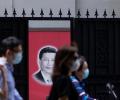
'China's opaque defence allocation processes are shrouded in mystery and have triggered security dilemmas among its neighbours and others,' notes China expert Srikanth Kondapalli.

The central government's Great Nicobar development project, proposed around an unprecedented transhipment port, will be executed to keep environmental impact minimal, and is essential as it is of national importance, the government has said amid calls to abort the controversial project due to ecological concerns, the Centre said in an official statement.

While the fiscal year has just begun, any windfall surplus will be welcomed by the government as it bids to meet the fiscal deficit target of 5.9 per cent of GDP, amidst lack of clarity on exactly to what extent will recession in the West impact India's trade and tax collections.


'We are in a position to start due diligence and private data room access shortly.'

Gross collection of tax on corporate and individual earnings jumped nearly 24 per cent so far in the current fiscal year that started on April 1, the tax department said on Sunday. The gross collection of taxes on corporate earnings rose 16.74 per cent during April 1 to October 8, while personal income tax collection jumped 32.30 per cent, the tax department said in a statement. Direct tax collection came at Rs 8.98 lakh crore between April 1 to October 8, 2022, 23.8 per cent higher than the gross collection in the corresponding period a year ago.

'Not disclosing information to the public indicates that there is something wrong with Project Cheetah.'
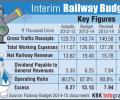
Anticipating healthier economic growth, the Railways has targeted a record Rs 1.6 lakh crore in revenue for the next financial year, while no increase has been proposed in passenger fares and freight rates.

The Reserve Bank's growth projection for next financial year is lower than 8-8.5 per cent projected by the finance ministry in the recent Economic Survey which was tabled in Parliament on January 31. Unveiling the bi-monthly policy, RBI governor Shaktikanta Das said, "Recovery in domestic economic activity is yet to be broad-based, as private consumption and contact-intensive services remain below pre-pandemic levels."
Railway Minister Lalu Prasad on Friday presented a populist interim Railway Budget in Parliament on Friday. Following is the entire speech of the railway minister:

HDFC was the top gainer in the Sensex pack, climbing nearly 4 per cent, followed by PowerGrid, Sun Pharma, Tata Steel, Tech Mahindra and Bajaj Finserv. NSE Nifty surged 234.75 points to 17,401.65.

India's smartphone shipment grew by 11.5 per cent in the first quarter of calendar year (CY) 2024 on a year-on-year basis to 34 million units. This is the third consecutive quarter of growth in shipments, International Data Corporation's (IDC) Worldwide Quarterly Mobile Phone Tracker said.

'I do not believe that you would have a booming economy when you go into elections if you had a budget which did not answer the fiscal deficit concerns.'
Several questions arise on the appropriateness of the measure in the already strained fiscal scenario, says M Govinda Rao.

Australia's state of Victoria has withdrawn as host of the 2026 Commonwealth Games, placing the future of the quadrennial multi-sport event in doubt

Tax devolution shares, which threaten to create a north-south divide among states, may have more to do with per capita income, and not so much with population.

The coaching-tuition-profiteering model built on the back of a broken education system is a scandal and an abomination, and must go, asserts Shekhar Gupta.

If the government cuts wasteful expenditure as it is trying now, the deficit would at most fall to 8 per cent, not less than that.

Per capita income in the state has consistently been below the national average for at least 24 years. However, it has narrowed the gap with the all-India level in recent years.

This will encompass the sale of Air India, a number of other privatisation initiatives, mergers, initial public offerings, the Centre's two exchange-traded funds, buybacks and offers-for-sale, and even monetisation of land assets.
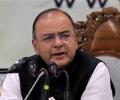
The Union Budget for 2017 is likely to be presented on February 1. An approval for merging the Railway Budget with the General Budget was accorded by Finance Minister Arun Jaitley on Monday.
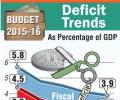
Finance Minister Arun Jaitley presented the Budget today.

In absolute terms, revenue receipts stood at Rs 9.07 lakh crore at the end of October. For the entire 2019-20, the revenue receipts have been pegged at Rs 19.62 lakh crore.
For example, railways, roads and highways, and shipping could form a section within the Budget as an omnibus transport sector

Of the Rs 1.97 trillion that the government intends to spend on all 14 production-linked incentive (PLI) schemes, around Rs 41,000 crore remains unutilised as of now, according to a senior government official. This means that 80 per cent of the total allocated amount, or Rs 1.56 trillion, will be used to pay incentives to companies eligible to claim benefits over the next few years. The unutilised amount/savings result from undersubscription, lukewarm responses in the case of schemes such as textile, as well as a reduction in the allocation of schemes.
There was no law that prevented the government from presenting a sixth full Budget, or something similar to it.

Public-sector enterprise stocks have seen a good run thus far in 2023-24 (FY24), with the S&P BSE PSU Index surging by over 26 per cent during the period, compared to an 11 per cent increase in the benchmark S&P BSE Sensex.
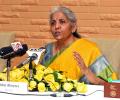
Macroeconomic management is usually a lot more comfortable with lower fiscal deficits. The sooner we get there, the better for the economy, says former Chief Economic Adviser to the Government of India Shankar Acharya.

As India emerges from the COVID-19 crisis, the ninth budget under the Modi government, including an interim one, is widely expected to focus on boosting spending on job creation and rural development, generous allocations for development schemes, putting more money in the hands of the average taxpayer and easing rules to attract foreign investments.

According to the figures released on October 31, the deficit till September had inched down to 65.6 per cent of the budget estimate for 2012-13, compared with 65.7 per cent till August.

Given the gap between budgetary allocation and use, a parliamentary standing committee has asked the Ministry of Ayurveda, Yoga and Naturopathy, Unani, Siddha and Homeopathy (Ayush) to take steps to prevent underutilisation of funds under the National Ayush Mission (NAM) scheme. According to the data, the ministry was allocated Rs 1,200 crore for the mission in the Budgetary Estimate (BE) for FY24. The Revised Estimate (RE) for the year fell to Rs 815 crore, of which Rs 589 crore, or 74 per cent, has been spent till January.

Against FY17 target of Rs 56,500 cr, Centre plans to fetch around Rs 6,400 cr in the first half.

'Nirmalaji's Budget announcements have long-term implications and are not backed by enough money when the short-term outlook looks bleak,' notes T N C Rajagopalan.

The government had set the direct tax collection target of Rs 3.70 lakh crore (Rs 3.7 trillion) in the budget for 2009-10, which was later revised upwards to Rs 3.87 lakh crore (Rs 3.87 trillion).

In this year's budget, Finance Minister Nirmala Sitharaman hiked tax on petrol and diesel, raised import duty on gold, levied additional surcharge on super rich and brought a tax on high value cash withdrawals as she sought to spur growth with reduction in corporate tax and sops to housing sector, startups and electric vehicles.

Rural outlay may go up 23% to reduce pains of demonetisation

Growth rate in per capita income is projected to fall to the lowest in 21 years this financial year - except for the financial years 2019-20 (FY20) and 2020-21 (FY21) - according to the first advance estimates. During the last 21 years, the two periods - FY20 and FY21 - saw growth rates in per capita income lower than 7.9 per cent, seen during FY24. This was despite the real gross domestic product (GDP) being projected to grow by 7.3 per cent in the current financial year by the first advance estimates.

This e-series funding round also makes OYO the most valued hospitality company in the country, ahead of the Tata group's Indian Hotels Company, which owns the Taj brand of hotels, and EIH, which owns the Oberoi brand of hotels.

Softening the demonetisation blow, the Budget for 2017-18 on Wednesday halved the tax to 5 per cent on incomes up to Rs 500,000 but proposed a new surcharge of 10 per cent on incomes between Rs 50 lakh and Rs 1 crore and raised duties on cigarettes and pan masala while stepping up allocations for infrastructure, rural, agriculture and social sectors.
'The Budget targets are achievable, but they require continued discipline and that the government sticks with the efforts to cut red tape and make business in India more efficient.'
